
Turkish Salmon Supplier for Canadian Importers
Kıyak Group stands out as a premier Turkish salmon supplier Canada can trust. Specializing in Oncorhynchus mykiss, commonly known as rainbow trout, our operation is rooted in the Black Sea region, renowned for producing high-quality seafood. We cater specifically to Canadian importers seeking reliable partners who can provide exceptional products and services. Our commitment to quality, sustainability, and transparency ensures that all our offerings meet the highest standards required by retail and foodservice segments. With our strong emphasis on building long-term relationships, we aim to be the go-to supplier for those in Canada looking for trustworthy seafood solutions. Our deep understanding of market dynamics allows us to efficiently tailor our services to meet the fluctuating demands of the industry.
Your Reliable Source for Turkish Salmon in Canada
Our operations are designed to support Canadian businesses looking for a dependable source of Turkish salmon. With a processing capacity of approximately 5,000 tons annually, we leverage advanced aquaculture techniques to uphold sustainability while ensuring product integrity. Beyond just supplying seafood, we assist importers in navigating specific requirements like bilingual labeling and CFIA verification. As part of our commitment to quality, we ensure traceability throughout the supply chain, from our facilities in Samsun to your storage. You can count on us to provide various product forms, including fresh, frozen, and value-added products to meet diverse market needs. Whether you're in the retail sector or the foodservice industry, our team is dedicated to fulfilling your requirements with professionalism and expertise. Additionally, we offer personalized buyer checklists to streamline your importing process, guaranteeing that you receive products that align perfectly with your business standards. Our proactive approach includes ongoing support, ensuring importers have complete confidence in our products, especially in navigating the complexities of the seafood market. We also monitor industry trends, allowing us to provide insights that may benefit our partners. Choose Kıyak Group as your trusted ally in sourcing superior Turkish salmon and experience unparalleled service tailored to your specific business needs.
Meeting Importer Needs
Tailoring supplies to meet the specific requirements of Canadian retailers and foodservice.
Bilingual Labeling
Ensuring compliance with Canadian regulations for multilingual product labeling.
CFIA Verification
Verification of compliance with Canadian Food Inspection Agency standards for seafood.
Responsible Aquaculture Requires Measurable Practices
The environmental performance of Turkish salmon depends on how individual farms and supply chains are managed. Responsible aquaculture involves attention to feed use, fish health, water quality, stocking practices, escapes, waste management, energy, worker welfare and compliance with applicable regulations. Sustainability should not be assumed from country of origin or product name alone. Buyers seeking environmental assurances can request current farm information, audit evidence, certification status where applicable and measurable improvement data. They should also examine processing yield, packaging and transport because impacts continue beyond the farm. Accurate, specific claims are more credible than broad statements, and any certification logo or sustainability message must be supported by valid documentation for the exact product supplied.
Smoked Turkish Salmon as a Value-Added Product
Smoking can transform Turkish salmon into a value-added product with a concentrated aroma, attractive slicing characteristics and broad menu potential. Depending on the approved process, smoked fish may be presented in sliced retail packs, breakfast dishes, sandwiches, salads, canapés or appetizer plates. Salt level, smoke intensity, moisture, slice thickness and packaging all influence consumer acceptance. Because smoked seafood is a ready-to-eat or minimally prepared category in many applications, processors and buyers must pay close attention to hygienic production, temperature control, shelf-life validation and label instructions. The specific product should be evaluated on its own technical documentation rather than assuming that all smoked formats have the same handling requirements.
What Is Turkish Salmon?
Turkish salmon is the commercial name commonly used for large rainbow trout, Oncorhynchus mykiss, raised in Türkiye under controlled aquaculture conditions. It is not the same species as Atlantic salmon, yet its generous fillet size, firm texture, appealing color and rich taste make it suitable for many of the same culinary applications. Production programs may combine freshwater farming with a marine growth stage, depending on the farm and region. For buyers, the name describes a distinctive Turkish aquaculture product whose specifications can vary by producer, harvest season, processing format and target market. Product decisions should therefore be based on verified size, trim, origin and quality documents rather than the commercial name alone.
From Freshwater Farms to the Black Sea
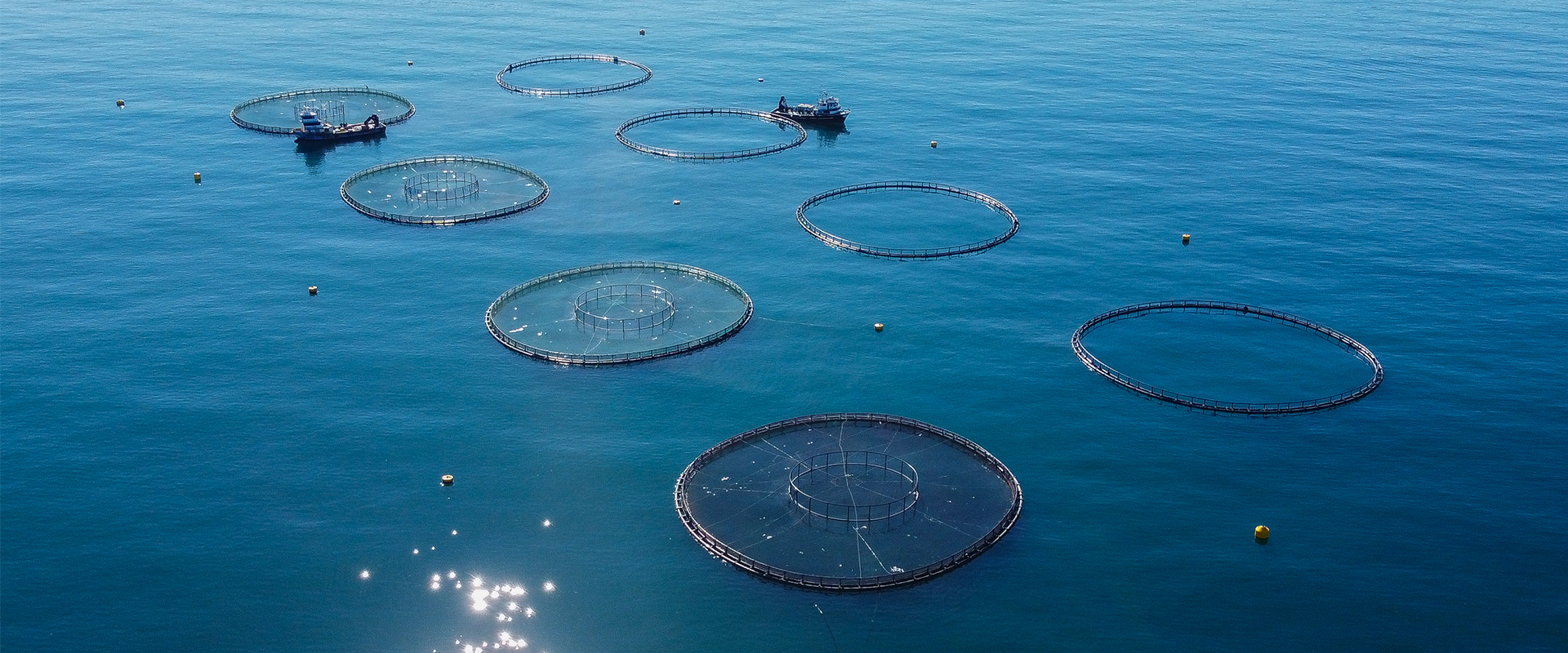
A typical Turkish salmon production cycle begins in freshwater, where rainbow trout are raised through their early growth stages under monitored farming conditions. Selected fish may later be transferred to marine cages in the Black Sea, where cool water and carefully managed feeding support further growth before harvest. The exact cycle, transfer timing and harvest window differ among producers and locations, so buyers should request farm-specific information when planning a program. This combination of freshwater expertise and marine farming has helped create a product with a substantial body size and versatile fillet yield. Throughout the cycle, water quality, stocking density, fish health, feed management and handling practices directly influence final quality.
What Buyers Should Check Before Ordering
A professional Turkish salmon purchase begins with a detailed written specification. Buyers should confirm the species, farming origin, harvest or production information, product form, size range, trim, skin and pin-bone requirements, packaging, storage conditions, shelf life and delivery temperature. They should also review the processing facility’s approvals, food-safety system, traceability procedure and documents required by the destination country. Photographs and samples are helpful, but they do not replace agreed tolerances and inspection criteria. Commercial terms should define net weight, glazing where relevant, carton configuration, labeling language, claims, lead time and the process for reporting non-conformities. Careful specification work protects both supplier and customer.
Supermarket Seafood Counter Use
Turkish salmon is suitable for supervised seafood counters where staff sell whole fish, fillets, or cut-to-order portions. Buyers can use this format to offer visible freshness, support customer requests for specific cuts, and build attractive displays alongside other chilled seafood products.
Private-Label Customization
Private-label Turkish salmon programs can include tailored product naming, label artwork, barcode placement, language details, and pack design in line with buyer requirements. This feature is useful for retailers and seafood brands that want to market Turkish salmon under their own identity while keeping a consistent product range.
E-Commerce and Home Delivery Use
Portioned or retail-packed Turkish salmon can be used in online seafood stores and home-delivery programs. Clearly labeled packs, suitable cold-chain packaging, and practical serving sizes help digital retailers offer a convenient salmon option to customers who order seafood for home cooking.
International Shipment Monitoring
The exporter and logistics partners monitor shipment progress and share relevant transport updates with the buyer. Timely communication allows the importer to coordinate customs procedures, warehouse capacity, receiving staff, onward distribution, and any action required before arrival.
Final Packing Verification
Before cases are released to storage, the packing team verifies product count, case weight, label accuracy, packaging condition, and order reference. This final review helps detect packing errors before palletizing and reduces discrepancies during shipment receiving.
Production and Harvest Planning
The supplier coordinates production availability and harvest timing with the requested shipment window. Planning considers fish size, processing capacity, packaging materials, cold-storage availability, and transport arrangements, helping the export order move through each stage without avoidable interruption.
Review Packaging Suitability
Packaging should be selected according to product condition, shipment duration, case weight, handling method, storage system, and sales channel. Buyers should confirm that the proposed Turkish salmon packaging supports product protection, efficient stacking, traceability, receiving, and any required consumer-facing presentation.
Compare Delivery Lead Times
The expected time for production, packing, documentation, transport booking, and international transit should match the buyer's inventory plan. Importers should compare realistic lead times rather than only shipment speed, because dependable Turkish salmon replenishment requires coordination across the complete supply chain.
Examine Traceability Information
Buyers should confirm that the exporter can provide batch identification and relevant production, packing, and shipment records. Effective traceability supports internal quality procedures, stock management, customer inquiries, receiving checks, and the ability to follow Turkish salmon through the distribution chain.
Reliable Shipment Verification
Loading teams can verify vehicle readiness, shipment references, batch quantities, case condition, and documentation before dispatch. This structured loading check strengthens confidence that the correct Turkish salmon order enters the planned refrigerated transport unit.
Transparent Buyer Communication
Reliable exporters communicate product availability, specification details, production timing, document status, shipment progress, and potential changes clearly. Timely information allows Turkish salmon buyers to coordinate purchasing, customs, warehousing, customer commitments, and onward distribution.
Connection to Middle Eastern Demand
Türkiye's proximity to Middle Eastern markets creates commercial potential for Turkish salmon suppliers serving wholesalers, supermarkets, hotels, restaurants, and catering businesses. Product format, labeling language, documentation, packaging, and delivery planning can be adapted to the specific requirements of each destination.

Frequently Asked Questions
What information should appear in a purchase inquiry?
A useful inquiry should include company and destination, product format, fresh or frozen condition, size, processing, quantity, packaging, label needs, delivery term, target date, transport preference, documents, and any special quality criteria. Complete requests receive more accurate responses.
Can buyers audit the supplier?
Supplier audits may be arranged subject to company policy, confidentiality, production schedules, biosecurity, safety rules, and commercial relationship. Buyers should define audit scope, requested documents, standards, participants, date, and reporting expectations in advance.
Which certifications can a Turkish salmon supplier provide?
Certifications differ among farms, processors, products, and export programs. Buyers should request current certificates directly from the supplier, verify their scope, facility name, validity, product coverage, and issuing body, and avoid assuming that one certificate covers every shipment.
Can labels be printed in multiple languages?
Multilingual labels may be prepared when the buyer supplies or approves accurate translations and mandatory destination information. Product identity, net weight, storage condition, batch coding, importer details, barcode, and regulatory statements should be reviewed before printing.
How is product temperature checked before loading?
The exporter follows its approved monitoring procedure and records relevant product or storage conditions before dispatch. Buyers should ask which measurements are taken, how results are documented, and what acceptance limits apply to the selected fresh, chilled, or frozen format.
How far in advance should an order be placed?
Required notice depends on product availability, harvest and processing schedules, packaging materials, private-label preparation, order volume, documentation, and freight capacity. Buyers should request a lead-time plan and place recurring or promotional orders earlier than standard replenishment orders.
Can multiple Turkish salmon products share one shipment?
A mixed-product shipment may be arranged when formats, temperature conditions, packaging, documentation, and loading plans are compatible. The exporter must confirm feasibility, while the buyer should provide separate quantities, labels, specifications, and receiving instructions for every item.
Are temperature records available during transit?
Temperature records may be available depending on the transport unit, carrier, route, and agreed monitoring equipment. Buyers should specify data-logger requirements, placement, access, reporting format, responsibility, and action procedures when arranging the shipment.
Can specifications be changed after order confirmation?
Changes may be possible only before certain production or packaging stages and require exporter approval. Adjustments to size, cut, quantity, label, pack, date, or destination can affect availability, price, lead time, documents, and already purchased materials.
Can Turkish salmon portions have fixed weights?
Fixed-weight or controlled-range portions may be possible for qualifying orders. Buyers should define target weight, tolerance, cut style, skin condition, packing count, freezing or chilling requirement, and expected volume so the processor can assess feasibility and pricing.
How are quality claims handled?
A quality claim should be reported promptly with shipment references, batch details, quantities, photographs, temperature information, receiving records, and a clear description. The exporter then reviews production and logistics evidence according to the agreed contract and claim procedure.

Long-Term Planning Creates Stability
Forecasting demand, scheduling orders, reserving production capacity, and coordinating transport can make Turkish salmon supply more stable. Long-term planning allows exporters and buyers to prepare for seasonal changes, promotional periods, and growth in customer demand.
Explore related content
Continue with pages and guides that complement this topic.